You have a launch, a sale or a big idea to share. You know your audience is spread across LinkedIn, X, TikTok, Instagram, YouTube and Facebook.
So you try to post everywhere. By day three you're copying the same caption into six apps, the video is the wrong shape for half of them, and the campaign quietly fizzles out.
There is a better way. A multi-platform campaign isn't six separate campaigns. It's one core message, shaped to fit each platform. This guide shows you how to plan it, adapt it and keep it running, and how CampaignBuilders can do most of the work for you.
What a Multi-Platform Campaign Really Is
A social media campaign is a focused push toward one goal over a set time. More signups, more sales, more event registrations, or more people who know your name.
Running it across every platform means the same story shows up wherever your audience spends time. Someone might see a short video on TikTok, a deeper post on LinkedIn and a reminder on Facebook. Each touch builds on the last.
The trick is that each platform has its own language. What works as a punchy X post would feel thin on LinkedIn, and a polished LinkedIn graphic can look stiff on TikTok. The message stays the same. The format changes.
Step 1. Pick One Goal and One Message
Every strong campaign starts with a single goal. Write it down in plain words, like "Get 300 people to sign up for our free trial in 30 days."
Then write your core message in one sentence. This is the idea every post will come back to. For example, "Our app saves small teams five hours a week on reporting."
If you can't say it in one sentence, the campaign isn't ready. A fuzzy message turns into six fuzzy feeds.
Step 2. Build Your Content Pillars
Posting the same line over and over gets boring fast. Instead, pick three or four angles that all support your message.
- The problem. Show the pain your audience feels today.
- The proof. Share results, numbers, reviews and customer stories.
- The how. Teach something useful related to your offer.
- The offer. Make a clear call to action with a reason to act now.
Each pillar can become many posts. A single customer story might turn into a LinkedIn post, a short video, a quote graphic and a thread.
Step 3. Shape the Message for Each Platform
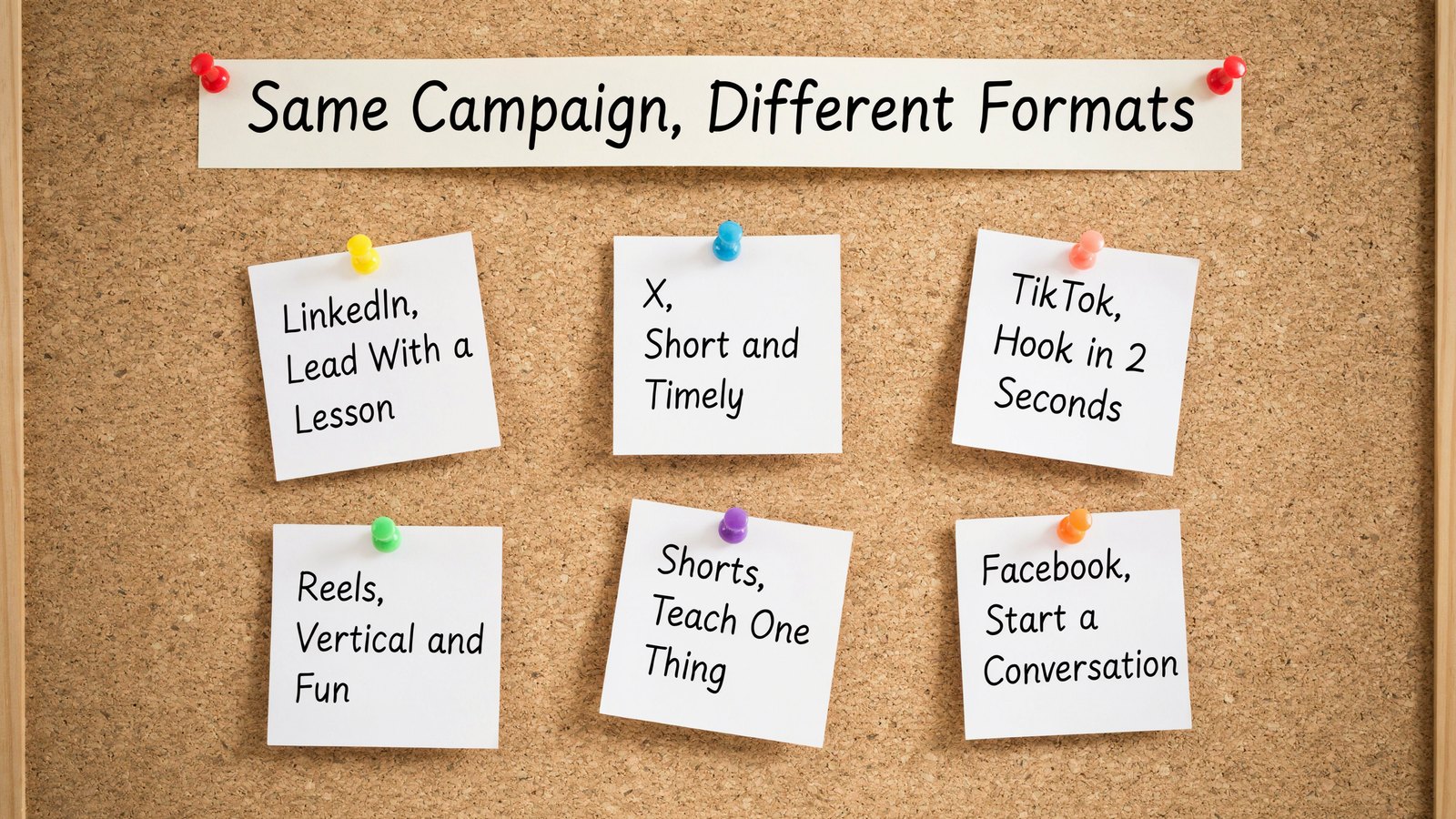
Here is how to adapt the same idea for the six big platforms.
LinkedIn rewards insight and stories. Lead with a strong first line, share a lesson or a result, and keep paragraphs short. Text posts and simple carousels do well. Post on weekdays, when people are at work.
X
X is fast and conversational. Keep posts short and sharp, join trending topics where they fit, and turn bigger ideas into threads. Post more often here than anywhere else, since the feed moves quickly.
TikTok
TikTok is about entertainment first. Hook viewers in the first two seconds, film in tall 9 by 16, and talk to the camera like a friend. Trends and sounds help, but a clear, useful idea wins in the long run.
Instagram Reels
Reels look a lot like TikTok but lean a little more polished. Use clean visuals, on-screen text and a strong cover image. Pair Reels with carousels and Stories for the same campaign.
YouTube Shorts
Shorts reach people who search and browse YouTube. Keep them under a minute, put the payoff early and point viewers to a longer video or your link. Shorts can bring subscribers who stay for years.
Facebook works well for local businesses, groups and older audiences. Mix short videos, photos and posts that start conversations. Events and groups are great for launches.
Step 4. Plan a Simple Campaign Calendar
A campaign needs a rhythm, not a random burst. Most run for two to six weeks and follow three phases.
- Warm up (first week). Talk about the problem and tease what is coming.
- Launch (middle weeks). Share the offer, proof and how-to content on every platform.
- Final push (last few days). Remind people of the deadline and share your best results.
Decide how often you'll post on each platform. A common starting point is daily on X, three to five times a week on TikTok, Reels and Shorts, and two to three times a week on LinkedIn and Facebook.
Need help filling the calendar? Our guide on how to plan a month of social media posts in one hour walks through the planning process.
Step 5. Create Once, Repurpose Everywhere
The fastest way to feed six platforms is to start with one big piece of content and break it down.
Film a short talk or write a strong article. Then cut it into clips for TikTok, Reels and Shorts, pull quotes for X, turn the key lesson into a LinkedIn post and share the full piece on Facebook. One hour of work can fill a week of posts.
This video from My Social Following shows the repurposing idea in action.
Step 6. Track, Learn and Adjust
Check your numbers once a week, not once a minute. Look at the metrics that match your goal.
- Reach and views tell you if people are seeing the posts.
- Engagement tells you if they care.
- Clicks and signups tell you if the campaign is working.
Then do more of what works. If one angle is getting twice the clicks, give it more posts. If one platform is quiet, try a new format there before you give up on it.
How CampaignBuilders Runs the Whole Campaign for You
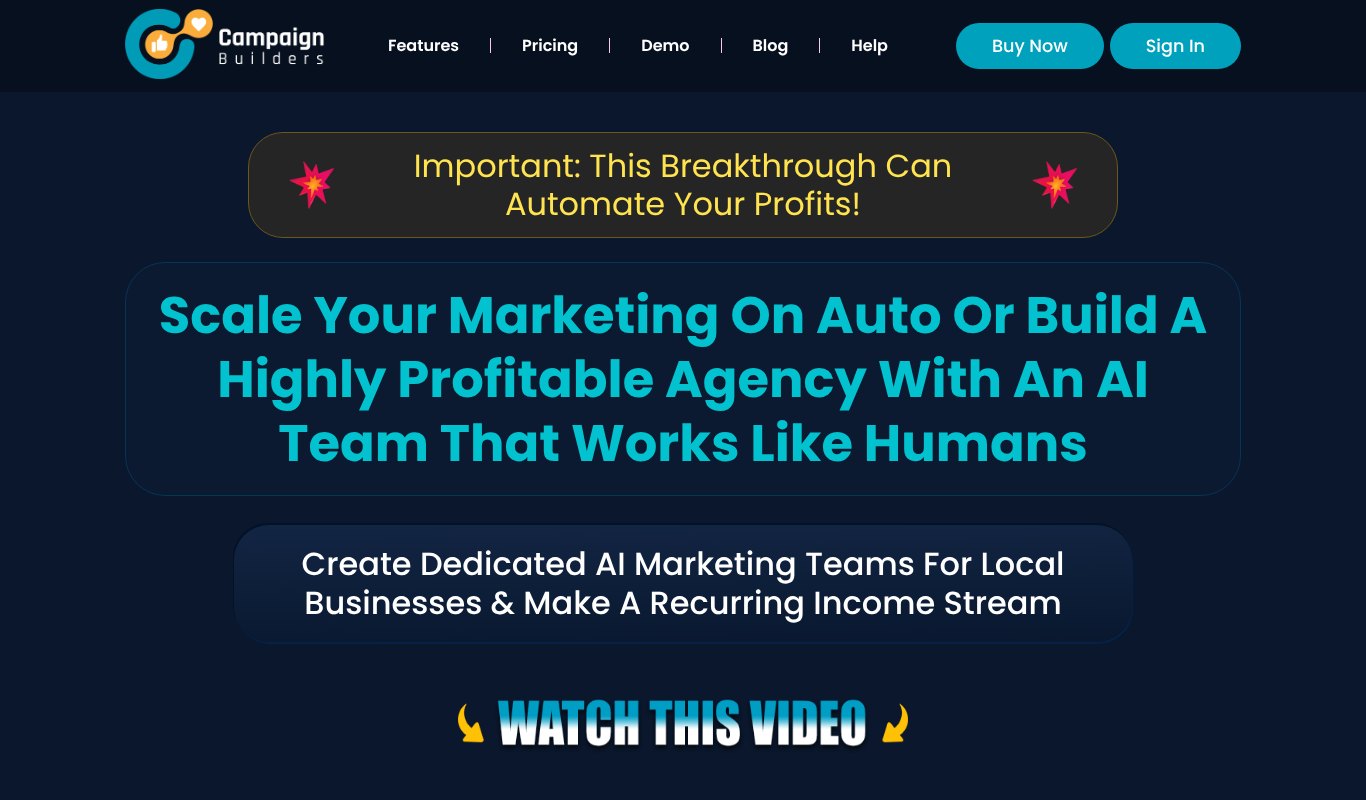
Running six platforms by hand is a full-time job. CampaignBuilders turns it into a few minutes a day.
CampaignBuilders uses agentic AI, which means a team of specialist AI experts that work together on your campaign. One agent researches trends, another writes posts, another creates graphics and videos, and they share notes so the whole campaign stays on message.
- Autonomous content engine. It creates posts, breaking news updates, memes, graphics and full videos without you starting from a blank page.
- Trending content for any niche. It finds what your audience is talking about right now, so your posts feel fresh.
- Long-term memory. It remembers your brand, your past campaigns and what worked, and gets better over time.
- Every platform. Content is shaped for LinkedIn, X, TikTok, Reels, Shorts and Facebook.
- Push to your phone. Finished content is sent to your phone, ready to review and post.
- Built for agencies too. Run campaigns for several local businesses from one account.
CampaignBuilders costs $5.58 a month, paid yearly ($67 a year), or $6.99 month to month, with a 30 day refund.
Want to compare it with other options? See our list of the best AI social media agents.
A Sample 30 Day Campaign
Here is how a small software company might run a free trial campaign across every platform.
| Week | Focus | What Goes Out |
|---|---|---|
| Week 1 | The problem | Short videos on the pain point, a LinkedIn story, X polls |
| Week 2 | The launch | Offer posts on all six platforms, a demo video, a Facebook event |
| Week 3 | The proof | Customer stories, result graphics, a how-to Short and Reel |
| Week 4 | The final push | Deadline reminders, best results recap, a last call on every feed |
With CampaignBuilders, the agents draft each week's posts in advance and send them to your phone. You review, tweak if needed and post.
Which Platform Does What
Each platform plays a slightly different role in a campaign. Knowing the role helps you decide what to post where.
| Platform | Main Role | Best Format |
|---|---|---|
| Trust and authority | Story posts and carousels | |
| X | Conversation and news | Short posts and threads |
| TikTok | Discovery and reach | Tall videos with a fast hook |
| Instagram Reels | Reach and brand look | Polished short videos |
| YouTube Shorts | Search and subscribers | Short videos that lead to long ones |
| Community and local reach | Videos, photos, groups and events |
In simple terms, short video platforms help new people find you, LinkedIn and X help them trust you, and Facebook helps you stay close to the community you build.
How to Write Hooks That Work on Every Platform
The first line or the first two seconds decide whether anyone sees the rest. A good hook works almost anywhere, as long as you shape it for the format.
- Ask a sharp question. "Still doing your reports by hand every Friday?"
- Share a surprising number. "We cut our reporting time by 80 percent."
- Promise a quick win. "Three settings that save you an hour a week."
- Start with a story. "Last March, our biggest client almost walked away."
- Call out the reader. "If you run a team of five or fewer, read this."
Use the same hook as a spoken line in a video, a bold caption on a graphic and the opening line of a LinkedIn post. One good hook can carry a whole week of content.
Should You Add Paid Ads?
Organic posts build trust and cost nothing but time. Paid ads add speed and reach, especially when you have a deadline.
A simple approach is to run the campaign organically first. After a week, look at which posts did best and put a small budget behind those. You already know they work, so your ad money goes further.
Keep the message and the look the same in your ads and your organic posts. When people see the same story in both places, they remember it.
Keeping Your Brand Consistent Everywhere
When your posts look different on every platform, people don't connect them to the same business. A few simple rules keep everything feeling like one campaign.
- Use the same two or three brand colors on every graphic and video cover.
- Keep one voice. Friendly, expert or bold, pick one and stick with it.
- Repeat a campaign phrase or hashtag so posts feel linked.
- Use the same face or mascot in videos when you can.
CampaignBuilders helps here too, because its long-term memory keeps your brand details on file and every agent works from them.
Mistakes That Sink Multi-Platform Campaigns
Copying and pasting everywhere. The same caption and the same video shape on every app looks lazy and gets ignored.
Spreading too thin. If you can't keep up with six platforms, start with the three where your audience is most active. Add the others later.
No clear call to action. Every post should point somewhere, even if it's just "follow for part two."
Stopping too soon. Most campaigns gain speed in the second and third week. Don't judge results on day two.
Ignoring comments. Replies are free reach. Answer them quickly, especially in the first hour after you post.
FAQ
Do I need to be on every platform?
No. Be where your audience is. For B2B, LinkedIn and X often matter most. For consumer brands, TikTok, Reels and Facebook may matter more. Start small and grow.
How long should a social media campaign run?
Most run two to six weeks. Short campaigns suit sales and events. Longer ones suit brand awareness and product launches.
Can AI really run my social media?
AI can do most of the research, writing and design. Tools like CampaignBuilders use a team of AI agents to create the content, and you keep the final say on what goes out.
How many posts a day is too many?
It depends on the platform. Several posts a day is normal on X, but more than one or two a day on LinkedIn or Facebook can tire your followers.
What is the best time to post?
There is no single best time. Start with weekday mornings for LinkedIn and evenings for TikTok and Reels, then check your own numbers after two weeks and adjust.
Final Thoughts
A great multi-platform campaign is one clear message, told in the right way for each feed. Pick a goal, build your pillars, shape the content for each platform, keep a steady rhythm and learn as you go.
If you'd rather have a team of AI experts do the research, writing, graphics and videos for you, try CampaignBuilders. Run one campaign on every platform without losing your weekends.